
Horizon Driving Simulator
JM Game StudiosRacing
4.2144.00 Reviews
- Version
- 2.8.2
- Installs
- 1.00M
- Age Rating
- Everyone
Screenshots
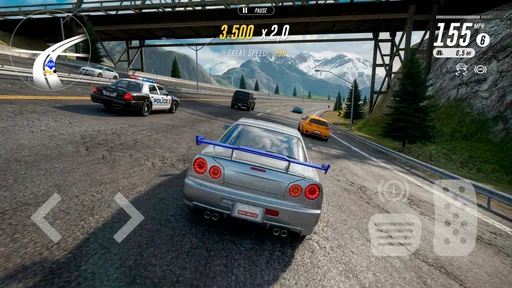
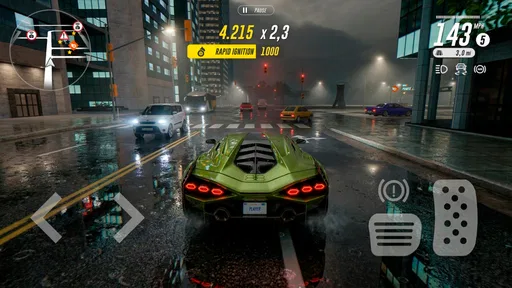
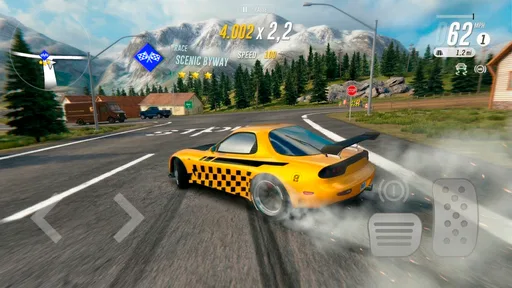
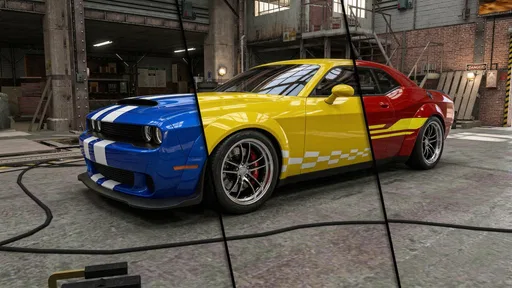
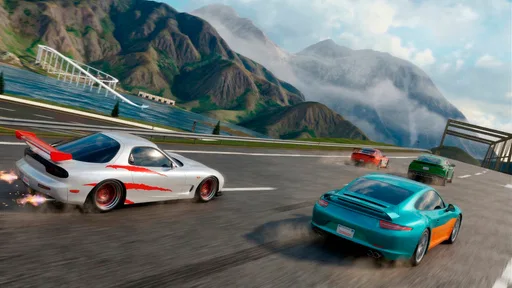
Our Review of Horizon Driving Simulator
 Analysis by Appyee
My first few minutes with Horizon Driving Simulator were less about chasing a finish line and more about learning how the road responds. I chose a direction, tried different movements, adjusted my car, and quickly understood that this is a game built around the pleasure of driving rather than a tightly scripted race. That makes it easy to pick up when I have a short break, while the open-world format gives me a reason to keep experimenting after the initial novelty fades.
Developed by JM Game Studios, this free racing game focuses on customizing a car and spending time behind the wheel in a broad driving environment. It is aimed at Everyone, so the presentation is accessible, and it runs on Android devices using version 7.1 or later. The game has reached over a million installs and holds an average rating of 4.2 from around ten thousand ratings, which matches my impression that it has a clear audience among players who want relaxed mobile driving with room for personal style.
How the driving loop feels from the first turn
I found that the first turn is a useful moment to set expectations: this is less about following a race script and more about choosing how I want to drive. In this section, I’ll look at why the open format can feel freeing to one player and aimless to another, then move on to practical checks that can make a session feel smoother.
The first action is simple, but the choice of direction matters
The strongest part of the opening experience is that I can act immediately. I do not need to understand a complicated progression system before enjoying the car. I start driving, look for a route that interests me, and use the environment as a reason to keep moving. That freedom gives the game a different mood from a traditional racing title where every moment is organized around a countdown and a fixed circuit.
My first useful habit was to avoid treating every drive as a race. When I approached the game with that expectation, I was tempted to rush and judge every turn by speed alone. Once I slowed down, the appeal became clearer: I could explore, test how the car felt through turns, and decide whether I wanted a calm drive or a more active session. The open-world structure works best when I allow myself to set a small goal instead of waiting for the game to provide one every few seconds.
That small goal might be reaching a particular area, practicing a difficult route, or simply taking a newly adjusted car for a test drive. This is one of the more useful ways to play because it turns an apparently loose environment into a personal challenge. I do not need a long uninterrupted session. A short trip with one clear purpose can still feel complete.
Feedback comes from steering, pace, and the car I build
The driving feedback is most satisfying when I pay attention to the relationship between my inputs and the car’s movement. A turn is not just something to survive; it is a chance to see whether my approach is too aggressive, too cautious, or well balanced. That makes the road itself part of the learning process. I gradually become more deliberate, especially when I stop making every decision at maximum speed.
Customization adds another layer to that feedback. Changing the car is not only a visual exercise in my play sessions. It also gives me a reason to return to roads I have already visited and see them differently. I can compare how a familiar route feels after spending time refining the vehicle, then decide whether the result suits my driving habits. The important trade-off is that customization is most enjoyable when I treat it as an experiment rather than assuming every change will automatically improve the experience.
That is a non-obvious strength of the game: the car becomes a conversation between preparation and driving. I make an adjustment, take it onto the road, notice what feels better or less comfortable, and then decide whether to keep it. Players who enjoy making small changes and immediately testing them will get more from the game than players who only want a single perfect setup.
The feedback is also more useful when I use a repeatable route. Instead of changing the car and wandering somewhere completely new each time, I like returning to a stretch with a few turns that I already understand. This creates a simple personal test track. It is not a formal mode or a promise of competitive accuracy; it is just a practical way to make customization feel meaningful and avoid judging a change only by first impressions.
The reward is the next improvement, not just the destination
What keeps me playing is the combination of movement and gradual refinement. Reaching a place can be satisfying, but the deeper reward is feeling that I understand my car a little better than I did before. I may discover a route that suits my style, find a more comfortable way to approach turns, or settle on a configuration that makes the next drive more enjoyable.
This reward structure is quieter than the constant spectacle of arcade racers. There is less pressure to treat every moment as a dramatic event, and that will be either a strength or a weakness depending on what you expect. If you want immediate explosions of action, tightly timed races, and a clear stream of prizes, this may feel too loose. If you like creating your own reasons to drive, the open format has more staying power.
I also appreciate that the game can fit different moods. On a busy day, I can use it as a brief driving break and focus on one small route. When I have more time, I can spend longer testing the car and exploring. That flexibility is more valuable than it sounds because it prevents the game from demanding a single ideal session length.
There is a practical caveat around the free-to-play model. The game is free to download, but optional in-app purchases range from $1.99 to $84.99 per item. That price range makes it worth deciding early how I want to play. I would begin without spending, learn what the normal progression feels like, and only consider a purchase if it solves a specific frustration rather than buying impulsively. Players who strongly dislike any store pressure should approach with caution.
The reset is what makes another drive worthwhile
A good session ends when I have completed the small objective I set, not necessarily when I have exhausted every possible road. That is important because the game’s freedom can otherwise become unfocused. I prefer stopping after a useful test or a satisfying drive, then returning later with a new idea. The reset gives the next session a purpose.
My most effective routine is straightforward: choose a car setup, pick one familiar route, drive it with a specific intention, and then change only one thing before trying again. If I alter everything at once, I cannot tell what affected the result. Changing one element creates a clearer comparison and makes the customization system feel less random. This workflow is especially helpful for players who enjoy tinkering but do not want to spend a long time making decisions in menus.
The same approach helps when a drive feels disappointing. Rather than immediately abandoning the game, I reset the session by reducing the goal. I might stop trying to cover a large area and focus on handling a single section more smoothly. That turns frustration into a manageable experiment. It is a small technique, but it is one of the best ways I found to keep the open-world design from feeling empty.
The reset also reveals one of the game’s limitations. Because the experience depends heavily on self-directed goals, players who need a strong sequence of missions may feel that they are doing too much of the organizing themselves. The game gives me the space to drive, but I have to supply much of the reason. That is not a flaw for everyone, yet it is a genuine consideration before installing.
Who will enjoy this particular style of racing?
I would recommend it to someone who likes cars, open environments, and customization more than strict tournament structure. It suits players who enjoy taking a vehicle out, trying a route, making an adjustment, and returning to see whether the change improves the drive. It is also a reasonable choice for casual players who want something accessible rather than a demanding simulation that requires a long learning period.
A realistic everyday use case is a short evening break. I can play for a few minutes, choose one stretch of road, and treat the drive as a focused reset after work or study. There is no need to commit to a full racing event. On a quieter weekend, I can extend that same routine into exploration and more detailed car testing. The game’s value comes from serving both situations without forcing them into the same pace.
I would be less likely to recommend it to a player whose main goal is online competition, deep simulation accuracy, or a heavily structured career. I would also suggest skipping it if optional purchases are likely to spoil the experience for you, especially because the highest listed item price is substantial. A conventional arcade racer may be a better fit if you want constant rewards and clearly defined races, while a more serious driving simulator may suit you better if realism matters more than accessible free-roaming play.
The Everyone age rating makes it approachable for a broad audience, but that does not mean every player will find the same depth. Younger or casual players may enjoy the immediate driving and car-focused play, while experienced racing fans may eventually want more competitive structure than this format emphasizes. My recommendation depends less on skill level than on whether you enjoy setting your own objectives.
What to know before installing
The current version is 2.8.2, and the game requires Android 7.1 or newer. Those details matter if you are installing on an older phone or tablet. I would also check available storage and device performance before beginning any long session, because open-world driving generally feels best when controls remain responsive and the screen stays comfortable to use. I would not choose this game expecting it to replace every kind of racing experience; it is more focused on free driving and car personalization.
One question many players will have is whether they need to spend money to enjoy the basic loop. My answer is to start free and evaluate the driving first. The core appeal is the act of driving, testing, and customizing, so a purchase should only make sense if it supports the way you already enjoy playing. Spending before understanding that loop could make the game feel more expensive without making it more satisfying.
Another likely question is whether the game works for short sessions. In my experience, yes, provided I create a narrow objective. A quick route or a single adjustment is enough for a complete visit. The open-world design becomes less effective when I expect it to generate a perfectly directed ten-minute activity on its own, so a little self-imposed structure helps.
Players may also wonder how it compares with usual racing alternatives. Compared with a track-based racer, this feels less about perfect lap times and more about the relationship between the car and the environment. Compared with a demanding simulator, it is easier to approach and less dependent on technical driving discipline. Compared with a purely casual driving toy, the customization gives me more reason to repeat routes and evaluate changes. Its position between those styles is both its identity and its main limitation.
My verdict on the action-feedback-reward-reset loop
The loop works because each part leads naturally to the next. I take the first action by choosing a direction and getting the car moving. The feedback comes from how the vehicle responds to my decisions and adjustments. The reward is discovering a better route, a more comfortable setup, or simply a drive that feels smoother than the previous one. Then I reset by choosing another small target, which gives me a reason to begin again.
That loop is not built for everyone. It asks me to bring some imagination and patience, and it does not hide the fact that optional purchases are part of the free experience. Still, the combination of open-world driving and customization gives the game a more personal rhythm than many mobile racers. I can play quickly, experiment carefully, or just enjoy a relaxed drive without treating every session like a competition.
After spending time with it, I see Horizon Driving Simulator as a good recommendation for players who want a free racing game centered on driving freedom and car-focused experimentation. JM Game Studios has created something that is easy to enter but more rewarding when I establish my own routines. The best reason to return is not simply to drive farther; it is to test one new idea and feel the difference on the road.
Verdict
Strengths of Horizon Driving Simulator
- Large open-world map offers plenty of roads to explore.
- Realistic traffic makes everyday driving feel more immersive.
- Wide selection of cars gives players different driving styles to try.
- Day and night cycles add variety to longer driving sessions.
- Simple controls make the game approachable for casual players.
Limitations of Horizon Driving Simulator
- Some vehicles and features may require grinding or in-app purchases.
- Traffic behavior can occasionally feel predictable or artificial.
- Long drives may become repetitive without more varied activities.
- Performance may drop on older phones during busy scenes.
- The game can consume significant battery during extended sessions.
Similar Picks in This Category
View All
Hill Climb Racing
Fingersoft4.3

Dr. Driving
SUD Inc.4.2

Traffic Rider
skgames4.5

Asphalt 8 - Car Racing Game
Gameloft SE4.6

Race Master 3D: Car Racing
Beresnev Games4.6

Extreme Car Driving Simulator
AxesInMotion Racing4.3
Frequently Asked Questions
What is Horizon Driving Simulator?
Horizon Driving Simulator is a mobile driving game focused on open-road exploration, vehicle control, and realistic-feeling driving challenges. After testing it, the main appeal is its combination of free-roaming routes, traffic-based driving, and vehicle customization. It is designed for players who enjoy cruising and improving their driving skills rather than following only a traditional level-by-level racing format.
Can Horizon Driving Simulator be played offline?
Some parts of Horizon Driving Simulator may be available without an internet connection, such as selected driving activities or previously loaded content, but online features can require connectivity. Internet access may be needed for advertisements, updates, cloud-related functions, leaderboards, or additional content. Because availability can vary by version and device, check the store listing and in-game requirements before downloading.
Does Horizon Driving Simulator offer realistic driving and customization?
The game provides driving controls intended to feel more involved than a simple arcade racer, with acceleration, braking, steering, and different road conditions influencing how the vehicle behaves. Customization options may include vehicle upgrades, visual changes, or unlockable cars. However, it remains a mobile game, so the physics are designed to balance accessibility with realism rather than fully replicate a professional simulator.
Is Horizon Driving Simulator free to download and play?
Horizon Driving Simulator can generally be downloaded without an upfront purchase, but free access may include advertisements, optional in-app purchases, or progression systems that encourage additional spending. Before installing, review the official store page for the current pricing details and purchase information. Parents should also check device purchase settings if children will be playing, particularly when payment methods are saved.
What devices are required to run Horizon Driving Simulator smoothly?
Performance depends on the phone or tablet, operating-system version, available storage, and the selected graphics settings. Newer devices with sufficient RAM and a capable graphics processor should provide smoother driving and shorter loading times, while older hardware may experience reduced frame rates or visual compromises. Keep the app updated, close background applications, and leave extra storage available for future updates.
Play our best games!


